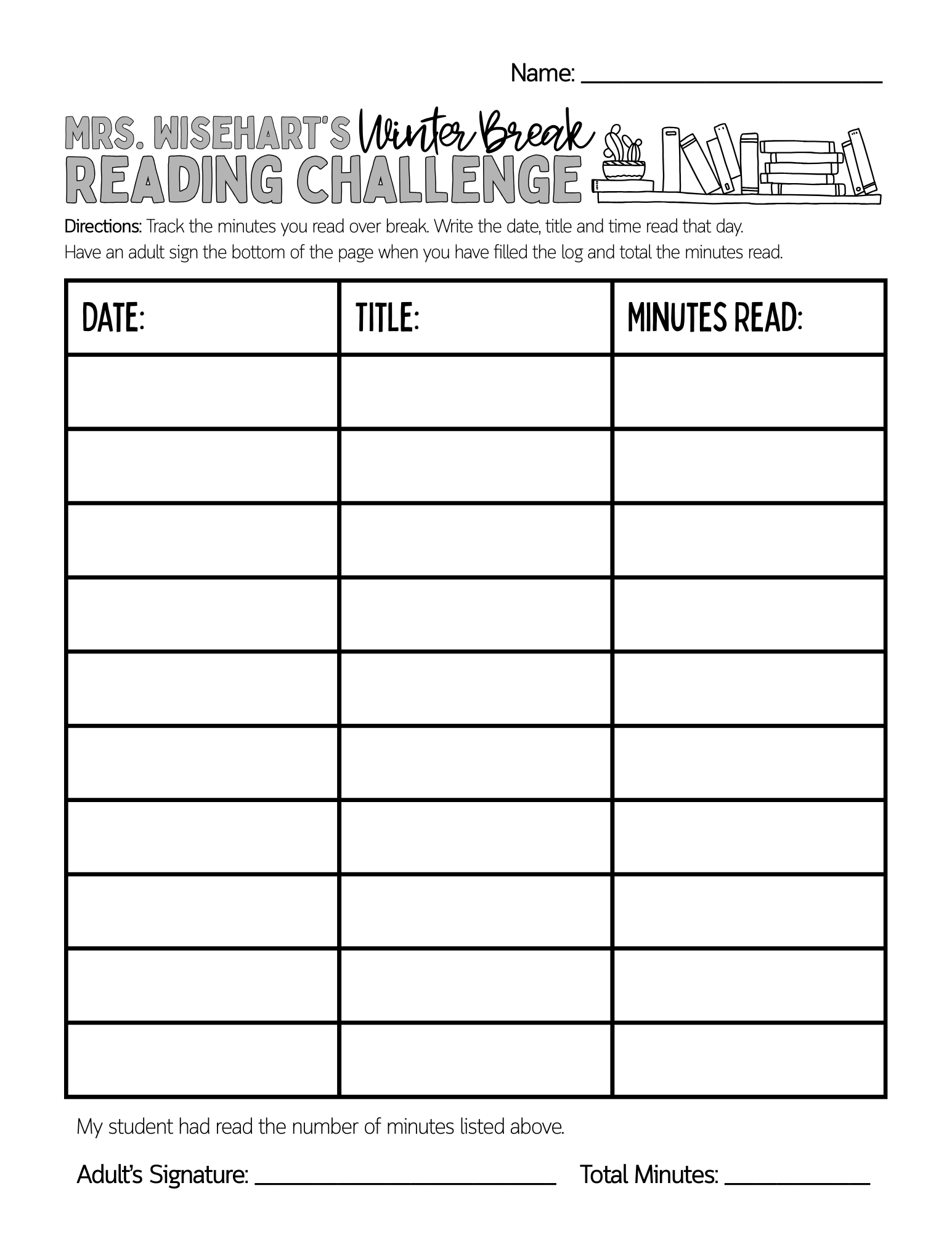
Mrs. Wisehart's Winter Break Reading Challenge
Over Winter Break, I am offering a challenge for all DeKalb Middle School students and staff. Using the Reading Log (attached and inserted in this post), I am challenging those who accept to read TEN SEPARATE TIMES over Winter Break, log their minutes, and have someone sign as a witness. If you would like to join your student in this challenge, that would be great! There is no amount of time that is required, just TEN SEPARATE TIMES. This is to help your student develop a habit of reading!
All students who turn in their completed Reading Log will receive a prize. The student who reads the MOST will receive a big prize. This is to encourage reading for enjoyment! This morning in Morning Meeting, I shared these facts with our students:
First: reading time turns into a huge word difference over a year.
Researchers tracked how much kids read outside school and estimated word exposure. If you read about 20 minutes a day, you run into around 1.8 million words a year. If you read about 5 minutes a day, it’s closer to 280,000 words. Same age, same school, totally different “word diet.” And words are basically the building blocks of thinking.
Second: daily “for fun” readers score higher nationally.
On the NAEP reading test, 13-year-olds who read for fun almost every day scored about 27 points higher than kids who hardly ever read for fun. That’s a big national gap, and it shows up again and again. It doesn’t prove reading is the only reason, but it’s a strong pattern: readers level up faster.
Third: right now, daily readers are kind of rare.
In 2023, only about 14% of 13-year-olds said they read for fun almost every day. So if you read most days, you’re in a small group that’s stacking advantages quietly while everyone else scrolls.
Fourth: reading helps your brain and mood long-term.
A huge study of 10,000+ kids found that starting to read for pleasure earlier was linked to stronger thinking skills in adolescence and better mental wellbeing. So reading now is basically investing in future-you’s brain.
Fifth, and this one is my favorite: reading lowers stress fast.
In a University of Sussex study, just 6 minutes of reading dropped stress levels by about 68%. That was better than listening to music, taking a walk, or playing video games. So if your brain feels like a phone overheating from too many apps, reading is a legit cooldown button.
So here’s the punchline:
Reading isn’t just school. It’s brain growth, test power, and stress control.
Twenty minutes a day sounds small, but over a year it’s millions of words, a stronger mind, and a calmer you.
And the best part? You don’t have to be “a reader.”
You just have to find one thing you like enough to keep turning pages. 😄📖